
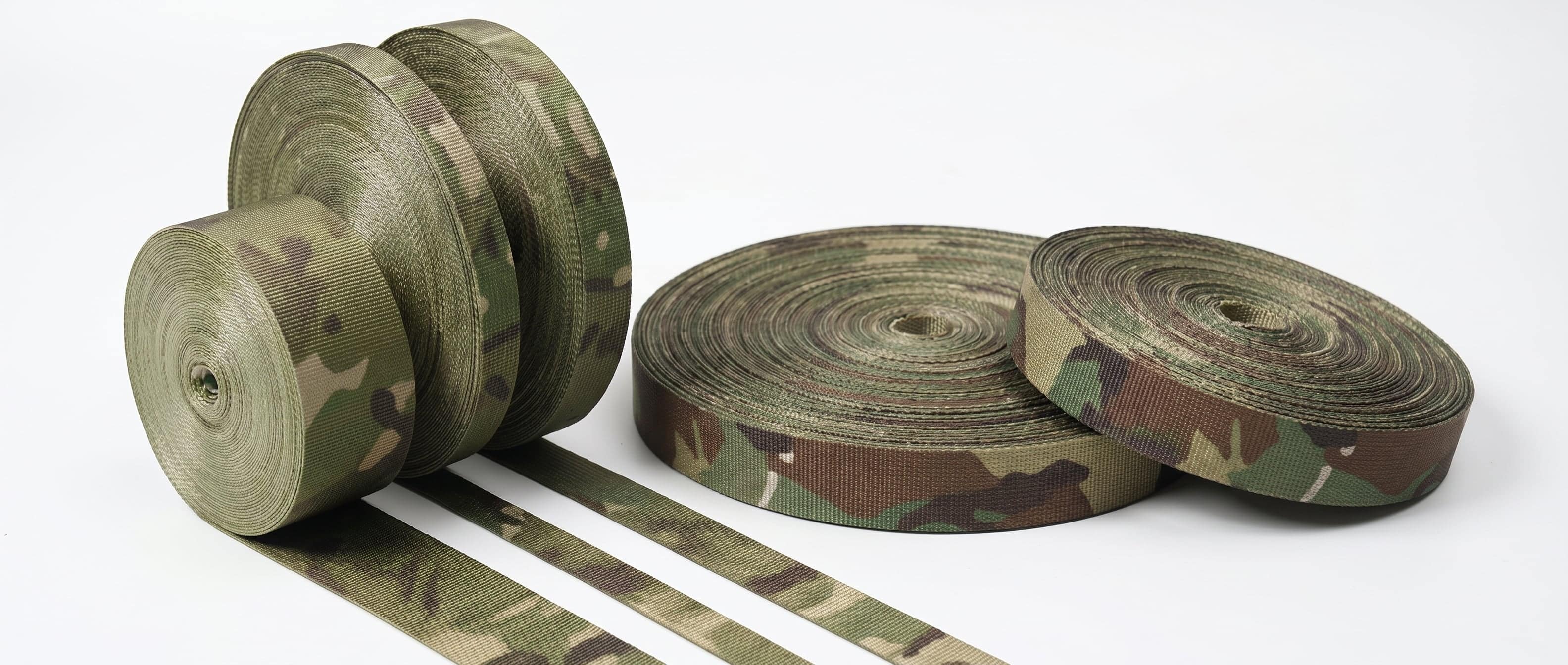
Products
Nylon Webbing
Polyamide — Engineered for Dynamic Loads, Demanding Environments, and Extreme Service
Nylon — chemically polyamide (PA) — is the fiber of choice when webbing must absorb dynamic loads, withstand sustained mechanical stress, or perform under conditions that would degrade polyester or polypropylene.
In military equipment, climbing and rescue gear, parachute systems, lifting and rigging applications, tactical load-bearing systems, and high-performance outdoor equipment, polyamide is rarely the second-best choice.
Compared to polyester, polyamide offers ten to fifteen percent higher tensile strength at equivalent yarn count, substantially greater elongation under load, and superior shock absorption. These properties make polyamide the dominant fiber in applications where webbing must yield without failing — distributing sudden tension events across the structure rather than transmitting them as rigid loads.
A Critical Note on Moisture Behavior
Polyamide is the only major commercial synthetic fiber that absorbs significant water. Moisture regain in standard atmospheric conditions reaches 4–5%, and polyamide saturates fully when immersed.
This behavior has direct consequences for webbing performance:
Tensile strength decreases by approximately 10–15% when wet. Webbing rated for a specific load in dry conditions will not deliver that load when saturated.
Elongation increases when wet. A polyamide harness that elongates 20% at break under dry conditions may elongate 25% or more when wet — a meaningful change in applications where geometry tolerance matters.
Dimensional changes occur. Polyamide webbing swells slightly when wet and contracts when dried. Repeated wet-dry cycling can introduce dimensional variation that polyester does not exhibit.
For applications where webbing will encounter water — marine, outdoor, parachute deployment, rescue, certain tactical environments — these characteristics must be engineered into the design. Polyamide remains the right material for these applications because its dynamic load behavior outweighs its moisture sensitivity. But it requires informed design decisions.
We provide moisture-state performance data alongside dry-state specifications for any polyamide webbing intended for wet-service applications.
PA6 vs PA66
Polyamide is not a single material. Two chemical structures dominate webbing applications, and the choice between them affects nearly every performance parameter.
Polyamide 6 (PA6, Nylon 6) is produced through ring-opening polymerization of caprolactam. It offers excellent dyeability, slightly higher elasticity, and lower processing temperatures than PA66.
Polyamide 6,6 (PA66, Nylon 6,6) is produced through condensation polymerization of hexamethylenediamine and adipic acid. It offers higher tensile strength, higher melting point, better dimensional stability, and superior abrasion resistance compared to PA6.
The two are not interchangeable. PA66 is the standard choice for high-performance applications — military, climbing, lifting, rescue. PA6 finds use in applications where dyeing flexibility, hand feel, or cost structure favor it over PA66's mechanical advantages.
Both have their place. The decision is application-specific.
Material Properties
- High tensile strength Typically 10–15% greater than polyester at equivalent yarn count.
- Substantial elongation under load Provides shock absorption polyester cannot match.
- Excellent abrasion resistance Among the highest of all commodity synthetic fibers.
- Good chemical resistance Stable against alkalis and most organic solvents; sensitive to strong acids.
- High melting point Approximately 220°C for PA6, 260°C for PA66.
- Moisture-sensitive behavior Polyamide absorbs water and changes mechanical properties when wet.
- UV-sensitive without stabilization Degrades under prolonged sunlight exposure unless treated.
Polyamide is engineered for performance, not for static convenience. Its properties shift with environmental conditions, and applications must be designed with those shifts in mind.
Engineered Polyamide Variants
Beyond standard PA6 and PA66, polyamide is available in chemically modified forms for specific performance requirements. We work with four engineered variants:
Textured Polyamide (Bulked Continuous Filament)
Polyamide yarn that has been thermally textured to introduce crimp and bulk, similar to DTY in polyester. Used in applications where soft hand feel and surface coverage matter alongside polyamide's mechanical advantages — tactical load-bearing systems, padded harnesses, comfort-critical military and outdoor equipment.
UV-Stabilized Polyamide
Polyamide modified with HALS (hindered amine light stabilizers) and UV absorbers to resist photodegradation. Standard polyamide loses approximately 50% of tensile strength after sustained UV exposure. UV-stabilized variants extend service life in outdoor applications by three to five times. Used in awnings, outdoor furniture webbing, marine applications, sun-exposed military equipment.
Toughened Polyamide
Polyamide blended with elastomeric modifiers to increase impact resistance and elongation under shock loading. Used in applications where webbing must absorb repeated impact events without crack initiation — climbing equipment, parachute risers, fall protection systems, dynamic rope applications.
Flame Retardant Polyamide (FR Polyamide)
Polyamide modified with flame retardant compounds to achieve self-extinguishing behavior. Standard polyamide is flammable; FR polyamide meets specifications such as MIL-W-17337 (military webbing flame resistance), NFPA standards (firefighter and rescue equipment), and EN ISO 11612 (industrial protective clothing). Used in firefighter equipment, military protective gear, industrial safety webbing, and any application requiring flame-resistant performance.
These variants are engineered materials — selected against specific performance requirements, not chosen by default.
On Coloring Polyamide
Polyamide can be colored through two distinct processes, each with different cost, MOQ, and production characteristics. We are direct about the constraints.
Solution-Dyed Polyamide
Pigment integrated into the polymer melt before fiber extrusion, identical in principle to our polyester and polypropylene processes. Solution-dyed polyamide offers the same color permanence advantages as solution-dyed polyester: pigment cannot wash, fade, or migrate. However, polyamide solution dyeing carries practical constraints that polyester does not: standard solution-dyed colors are limited to five — black, military green, coyote brown, navy blue, and natural (off-white / pale yellow); custom solution-dyed colors require minimum order quantities of 15–20 metric tons, extended production scheduling, and additional pricing premiums. These constraints reflect polyamide masterbatch economics, not our preference. For most military, outdoor, and high-performance applications, the five standard colors cover the requirement. Custom solution-dyed colors are accommodated for sufficiently large orders.
Piece-Dyed Polyamide
Polyamide accepts conventional aqueous dyeing across the full color spectrum, with good fastness performance. We do not operate piece-dyeing equipment within our facility. For piece-dyed polyamide webbing, we partner with specialized dyeing facilities — either dye houses we have established quality relationships with, or facilities specified by the customer. The piece-dyeing process is managed by these external partners. We retain quality oversight and material traceability, but the dyeing operation itself is outside our facility.
This is how the polyamide webbing industry generally operates. We are direct about it.
Specifications
Technical Data
| Property | Standard PA6 FDY | Standard PA66 FDY | Textured Polyamide | UV-Stabilized PA66 | FR PA66 |
|---|---|---|---|---|---|
| Tenacity (g/denier) | 6.5 – 8.0 | 8.0 – 9.5 | 5.5 – 7.0 | 7.5 – 9.0 | 6.5 – 8.0 |
| Elongation at Break (%) | 22 – 32 | 18 – 25 | 28 – 40 | 18 – 25 | 18 – 28 |
| Shrinkage at 177 °C (%) | 8.0 – 12.0 | 5.0 – 9.0 | 9.0 – 14.0 | 5.0 – 9.0 | 6.0 – 10.0 |
| Melting Point (°F) | 410 – 430 | 490 – 510 | 410 – 430 (PA6 base) | 490 – 510 | 490 – 510 |
| In Flame | Burns slowly, melts and drips | Burns slowly, melts and drips | Burns slowly, melts and drips | Burns slowly, melts and drips | Self-extinguishing or limited burning |
| After Flame | Self-extinguishing in most conditions | Self-extinguishing in most conditions | Self-extinguishing in most conditions | Self-extinguishing in most conditions | Self-extinguishing — meets MIL/NFPA flame standards |
| Chemical Resistance | Good to alkalis, organic solvents; sensitive to strong acids | Good to alkalis, organic solvents; sensitive to strong acids | Good to alkalis, organic solvents; sensitive to strong acids | Good to alkalis, organic solvents; sensitive to strong acids | Good to alkalis, organic solvents; sensitive to strong acids |
| Specific Gravity (g/cc) | 1.14 | 1.14 | 1.14 | 1.14 | 1.18 – 1.22 (FR additives) |
| Moisture Regain (%) | 4.0 – 4.5 | 4.0 – 4.5 | 4.0 – 4.5 | 4.0 – 4.5 | 3.5 – 4.5 |
| UV Resistance | Standard (degrades under prolonged exposure) | Standard (degrades under prolonged exposure) | Standard | Significantly enhanced — 3–5× standard service life | Standard |
| Application Profile | General webbing, accessory and decorative | High-performance load-bearing, military and tactical | Soft-hand, padded harness, comfort layers | Outdoor, marine, sun-exposed equipment | Firefighter, military FR, industrial flame-resistant |
- FDY
- = Fully Drawn Yarn
- PA6 / PA66
- = Polyamide 6 / Polyamide 6,6
- FR
- = Flame Retardant
Reference data based on industry-standard polyamide yarn testing. Yarn-level specifications confirmed against material supplier datasheets; finished webbing performance verified through accredited third-party testing (SGS / Bureau Veritas / Intertek) on a per-product basis.
Material Specimens
Polyamide yarn and webbing
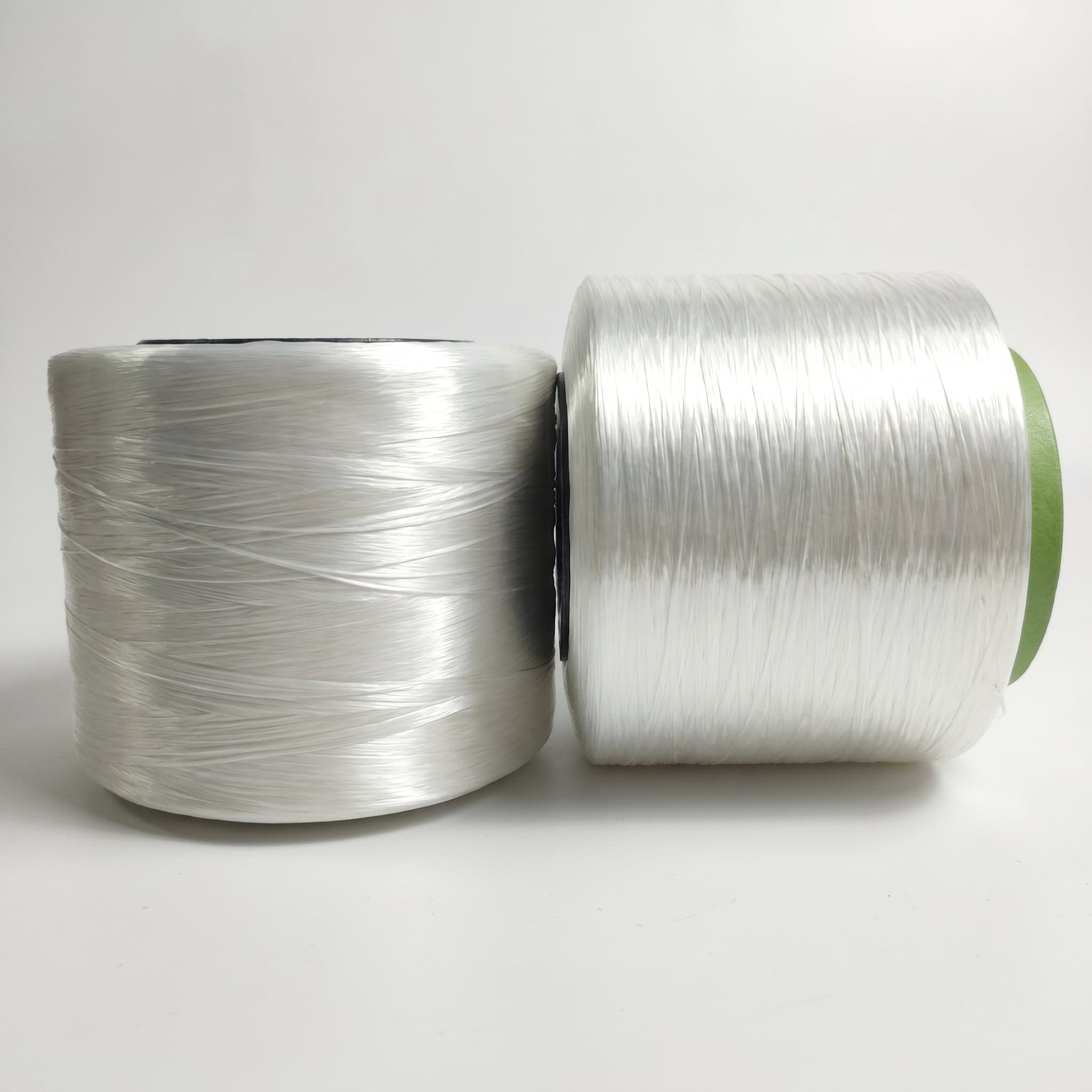
Polyamide yarn specimen
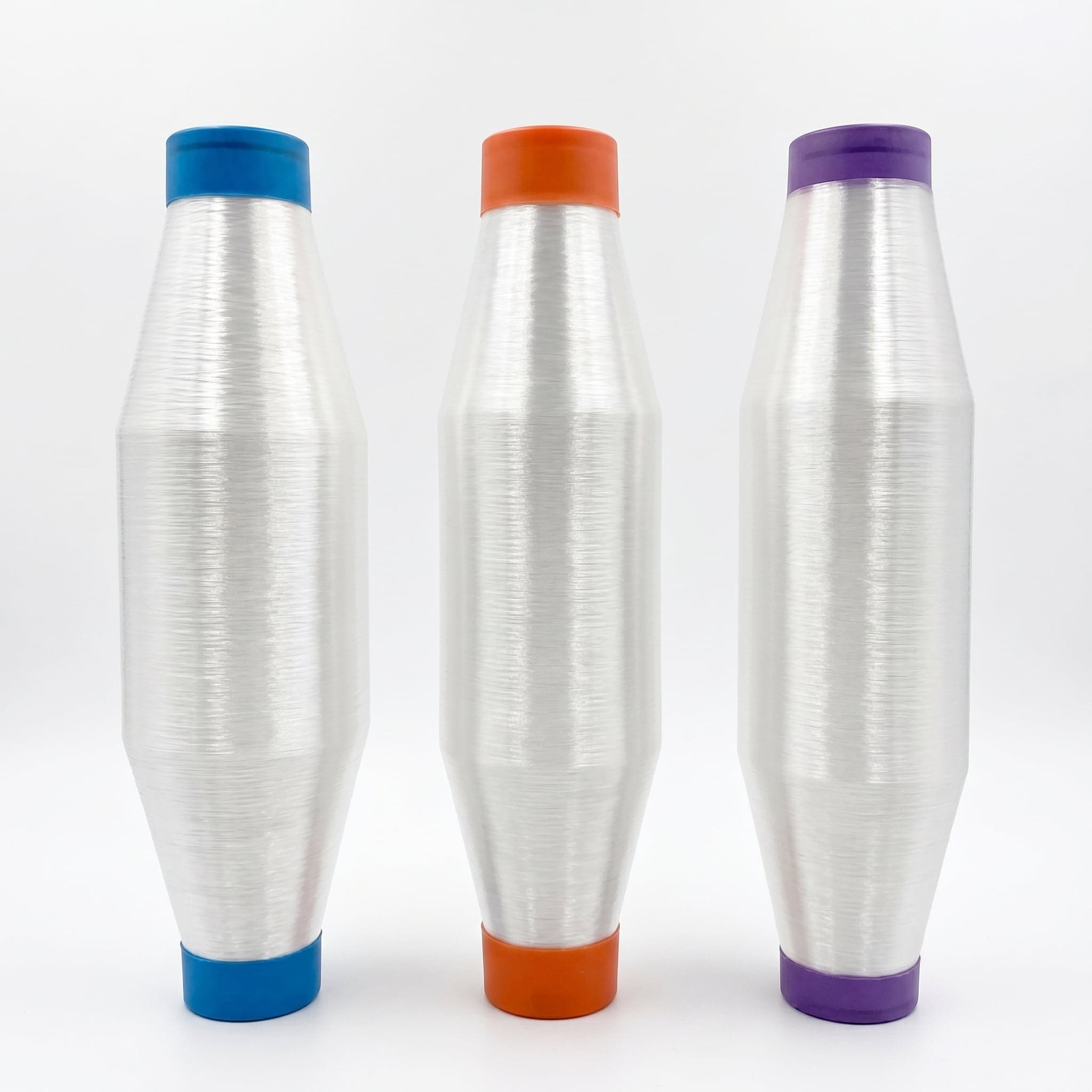
Polyamide yarn specimen
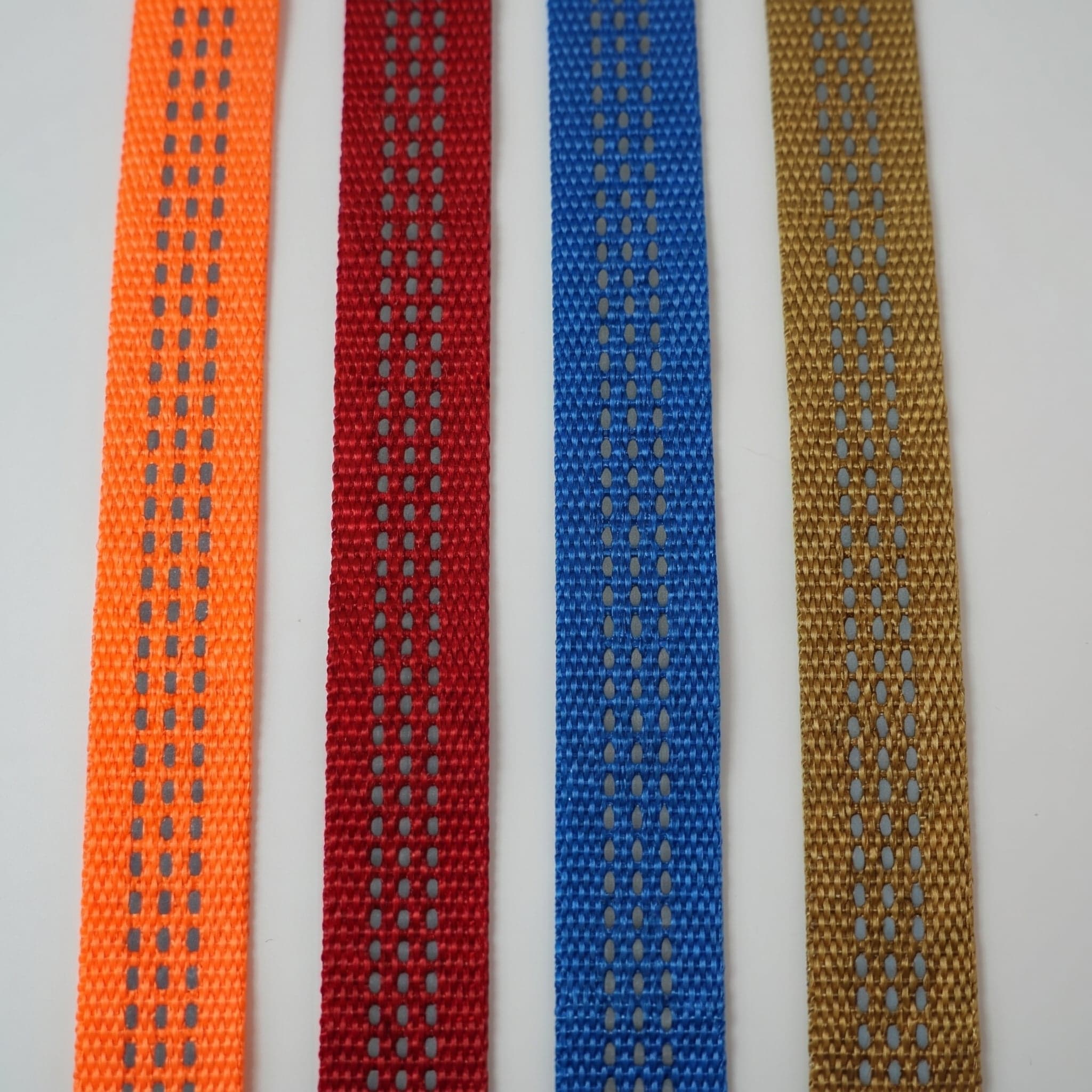
Polyamide yarn specimen
Polyamide (PA6 / PA66) across standard and engineered variants.
Yarn Selection Within Polyamide
We use polyamide FDY (Fully Drawn Yarn) and textured polyamide variants for our webbing applications. Five primary constructions cover the application range:
Standard PA6 FDY
General-purpose polyamide webbing, accessory and decorative applications.
Standard PA66 FDY
High-performance load-bearing webbing, military and tactical applications.
Textured Polyamide
Soft-hand applications, padded harness surfaces, comfort-critical military and outdoor gear.
UV-Stabilized PA66 FDY
Sustained outdoor exposure, marine applications, awning and shade structures.
FR PA66 FDY
Flame-resistant applications, firefighter and military protective equipment.
Yarn construction is selected against the application's load profile, environmental exposure, and processing requirements.
Where Polyamide Webbing Fits
Our polyamide webbing is engineered for the following primary application categories:
Military and tactical equipment
Load-bearing systems, MOLLE webbing, slings, harnesses, tactical accessories.
Climbing and rescue gear
Harnesses, slings, anchor systems, dynamic load applications.
Parachute and aerial deployment systems
Risers, harness webbing, deployment systems.
Lifting and rigging applications
Slings, tie-downs, recovery webbing.
Outdoor and expedition equipment
Backpack straps, outdoor harness systems, technical outdoor gear.
Industrial safety and fall protection
Safety harness webbing, lanyards, retention systems.
Marine and water-sports equipment
Webbing for water-adjacent applications where polyamide's strength outweighs its moisture sensitivity through engineered design.
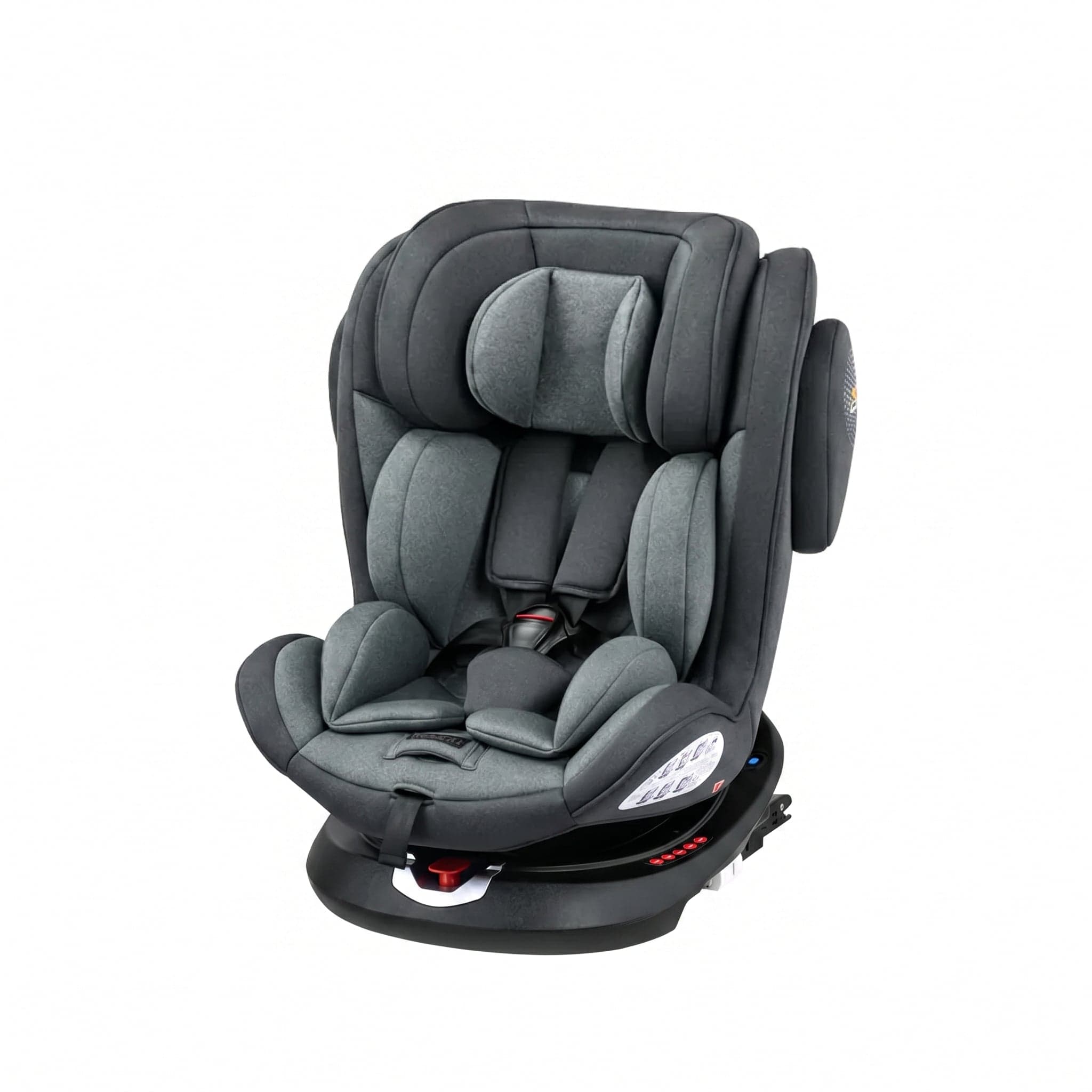
Juvenile applications are a smaller portion of our polyamide production, served through a dedicated juvenile-focused product specification. See the Polyamide Juvenile Webbing page for details.
Looking for Specifications That Aren't Listed?
Custom width, thickness, tensile rating, color, finish — part of our daily work. Direct technical communication with our owner-operator is part of how we work.