
Products
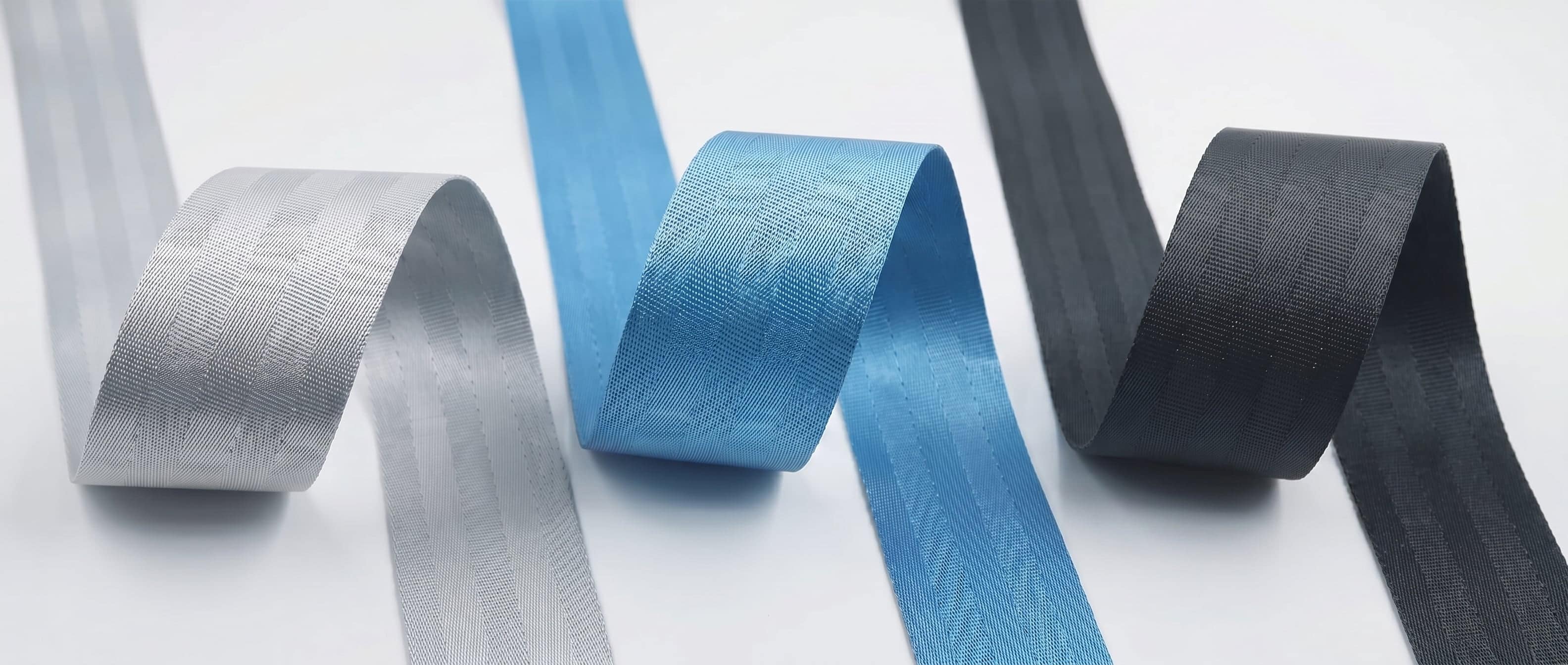
Polyester Webbing
The Engineering Foundation of Modern Safety Webbing
Polyester (PET) is the most widely used fiber in modern webbing — for sound engineering reasons. No other commodity-grade synthetic combines its mechanical strength, chemical stability, and process versatility at a comparable cost.
For applications requiring years of daily use under environmental stress, polyester is rarely the second-best choice.
This is why polyester accounts for approximately seventy-five percent of our annual production. And why every meter of it is solution-dyed — without exception.
Material Properties
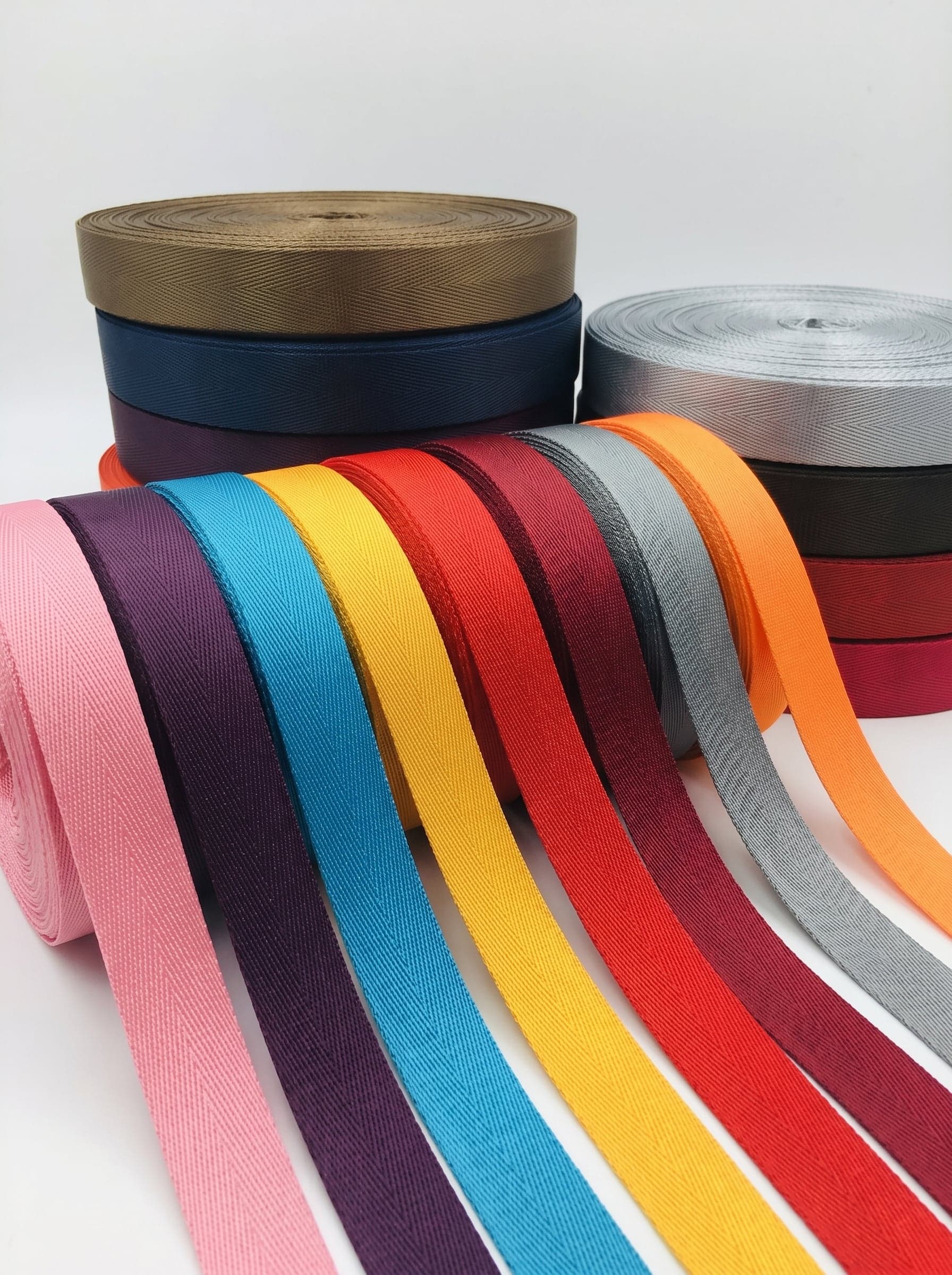
- High tensile strength Strong relative to weight — strength without bulk in finished webbing.
- Low elongation under sustained load Predictable, controlled performance in restraint applications.
- Excellent dimensional stability Maintained across temperature and humidity, with no drift over the service life.
- Hydrophobic Moisture regain below 0.5%; resistant to mildew.
- Chemical resistance Stable against acids, weak bases, and common cleaning agents.
- UV resistance Significantly exceeds nylon.
- Excellent abrasion resistance Holds up under daily friction and laundering cycles when properly woven and finished.
These properties, individually unremarkable, become decisive in combination. A juvenile harness requires every one of them simultaneously.
Specifications
Technical Data
| Property | FDY 300D/96F | DTY 300D/96F | FDY 1000D Industrial | DTY Specialty | FDY SHT |
|---|---|---|---|---|---|
| Tenacity (g/denier) | 4.5 – 5.5 | 3.5 – 4.2 | 7.5 – 8.5 | 4.0 – 4.8 | 8.5 – 9.5 |
| Elongation at Break (%) | 18 – 25 | 25 – 35 | 12 – 17 | 22 – 30 | 9 – 13 |
| Shrinkage at 177 °C (%) | 6.0 – 9.0 | 7.0 – 11.0 | 4.0 – 7.0 | 4.0 – 7.0 | 2.5 – 5.0 |
| Melting Point (°F) | 482 – 500 | 482 – 500 | 482 – 500 | 482 – 500 | 482 – 500 |
| In Flame | Burns slowly, melts and drips | Burns slowly, melts and drips | Burns slowly, melts and drips | Burns slowly, melts and drips | Burns slowly, melts and drips |
| After Flame | Self-extinguishing | Self-extinguishing | Self-extinguishing | Self-extinguishing | Self-extinguishing |
| Chemical Resistance | Excellent to acids, organic solvents; poor to strong alkalis at elevated temperature | Excellent to acids, organic solvents; poor to strong alkalis at elevated temperature | Excellent to acids, organic solvents; poor to strong alkalis at elevated temperature | Excellent to acids, organic solvents; poor to strong alkalis at elevated temperature | Excellent to acids, organic solvents; poor to strong alkalis at elevated temperature |
| Specific Gravity (g/cc) | 1.38 | 1.38 | 1.38 | 1.38 | 1.39 |
| Moisture Regain (%) | 0.4 | 0.4 | 0.4 | 0.4 | 0.4 |
| Application Profile | Standard juvenile webbing, soft-hand applications | Comfort surfaces, contact layers | Load-bearing harness, primary safety paths | Premium contact layers, low-shrink applications | High-tension safety, automotive-grade |
- FDY
- = Fully Drawn Yarn
- DTY
- = Draw Textured Yarn
- SHT
- = Super-High Tenacity
- 300D / 1000D
- = Yarn linear density (denier)
- 96F
- = 96 filaments per yarn
Yarn-level specifications confirmed against material supplier datasheets; finished webbing performance verified through accredited third-party testing (SGS / Bureau Veritas / Intertek) on a per-product basis.
Material Specimens
Polyester yarn and webbing
Polyester yarn specimen
Polyester yarn specimen
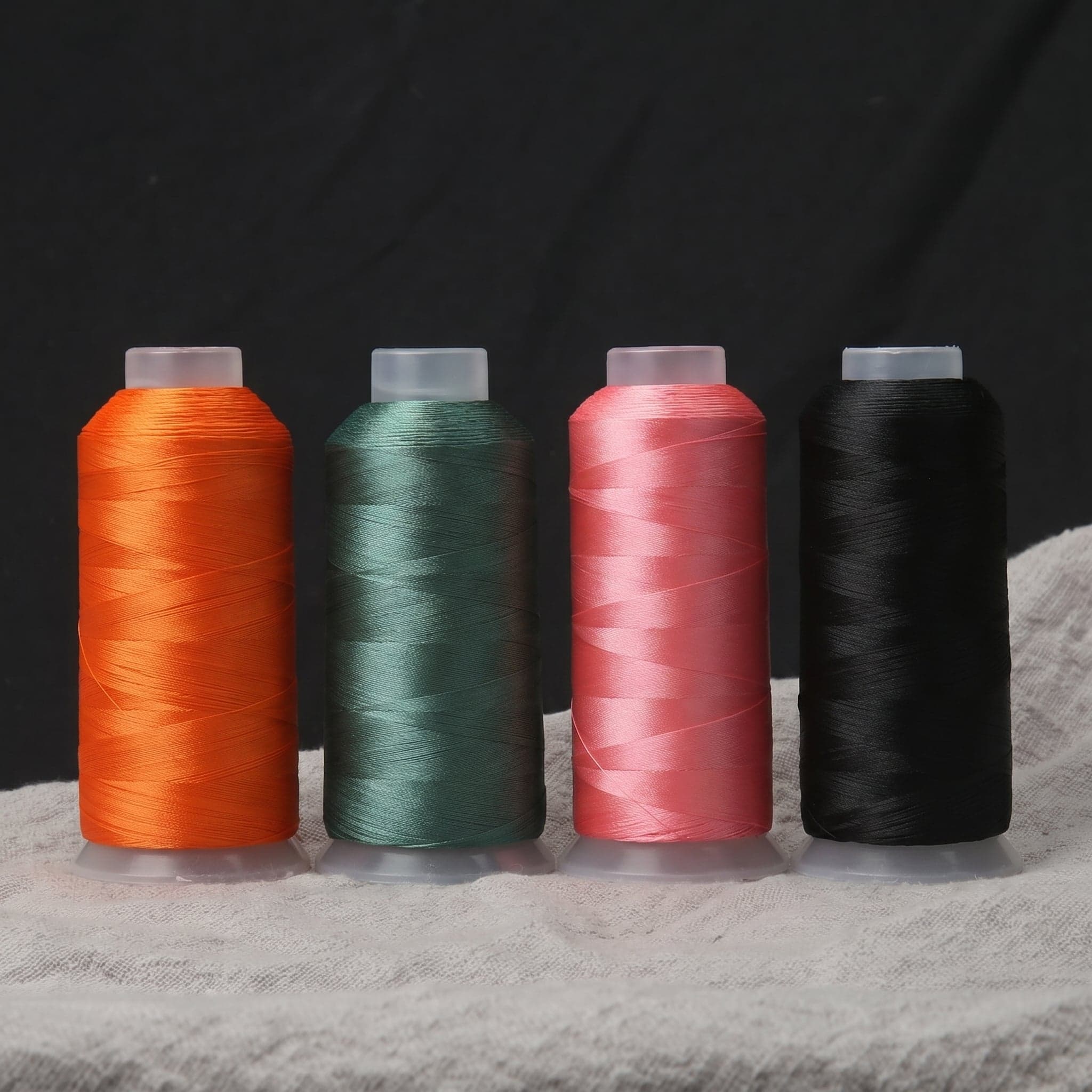
Polyester yarn specimen
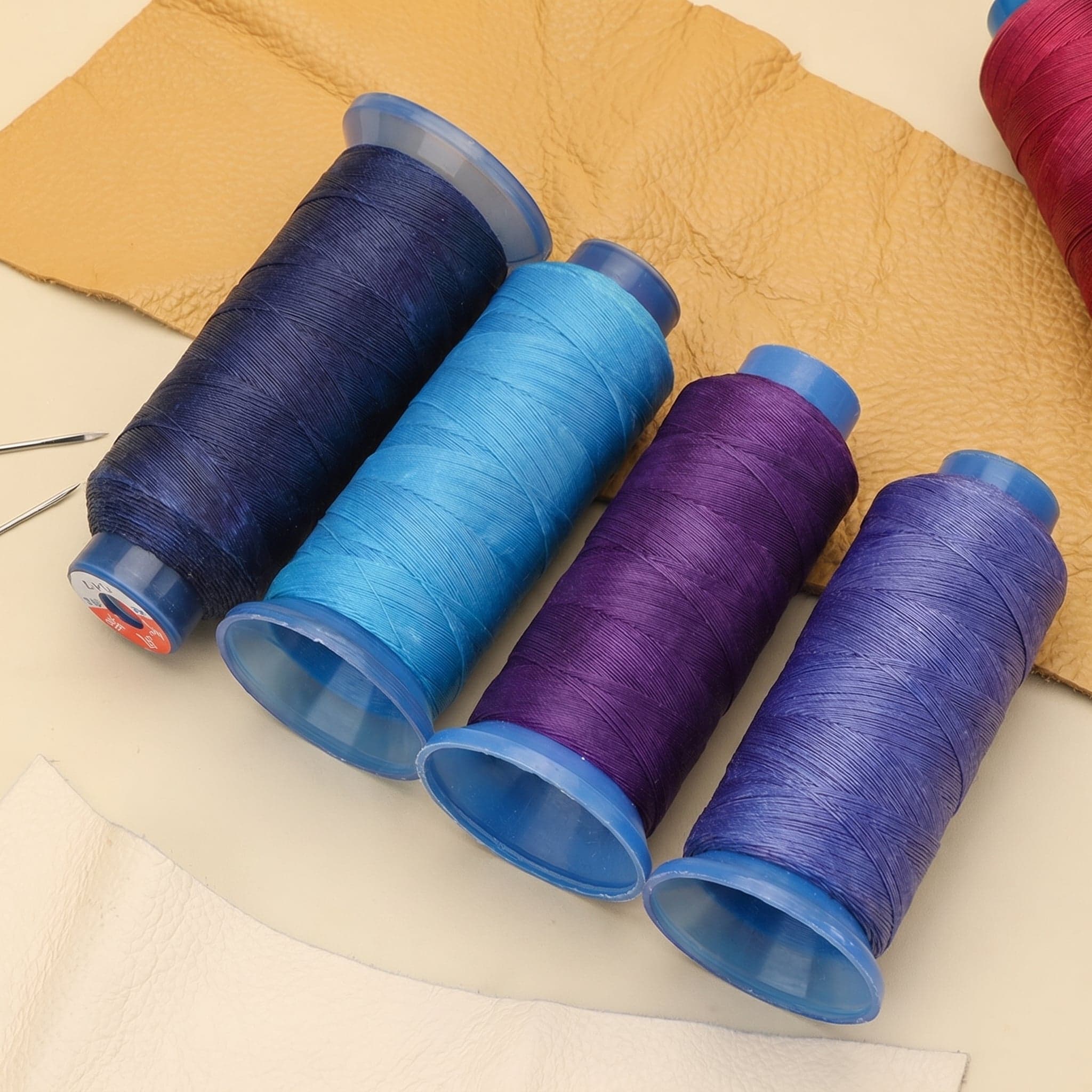
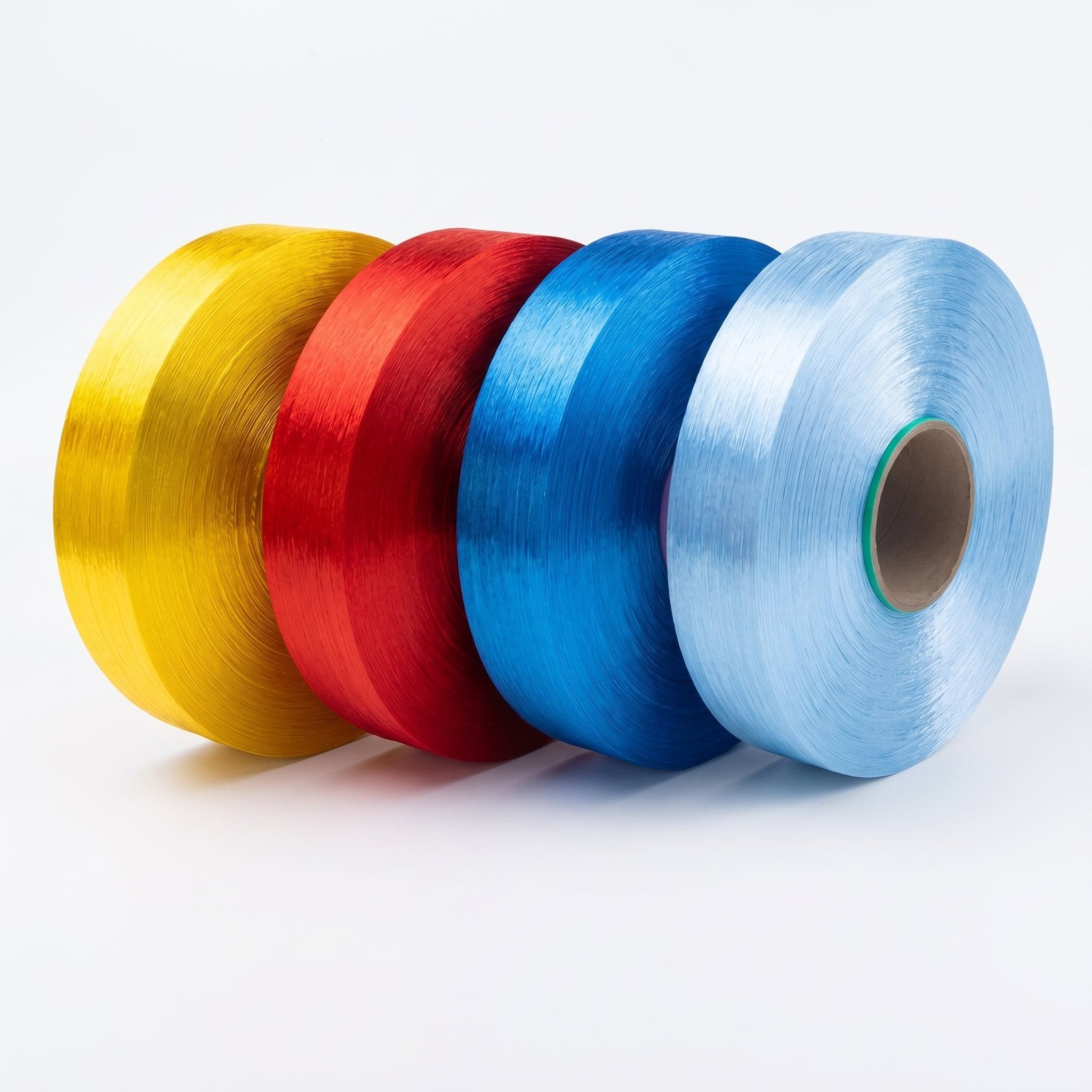
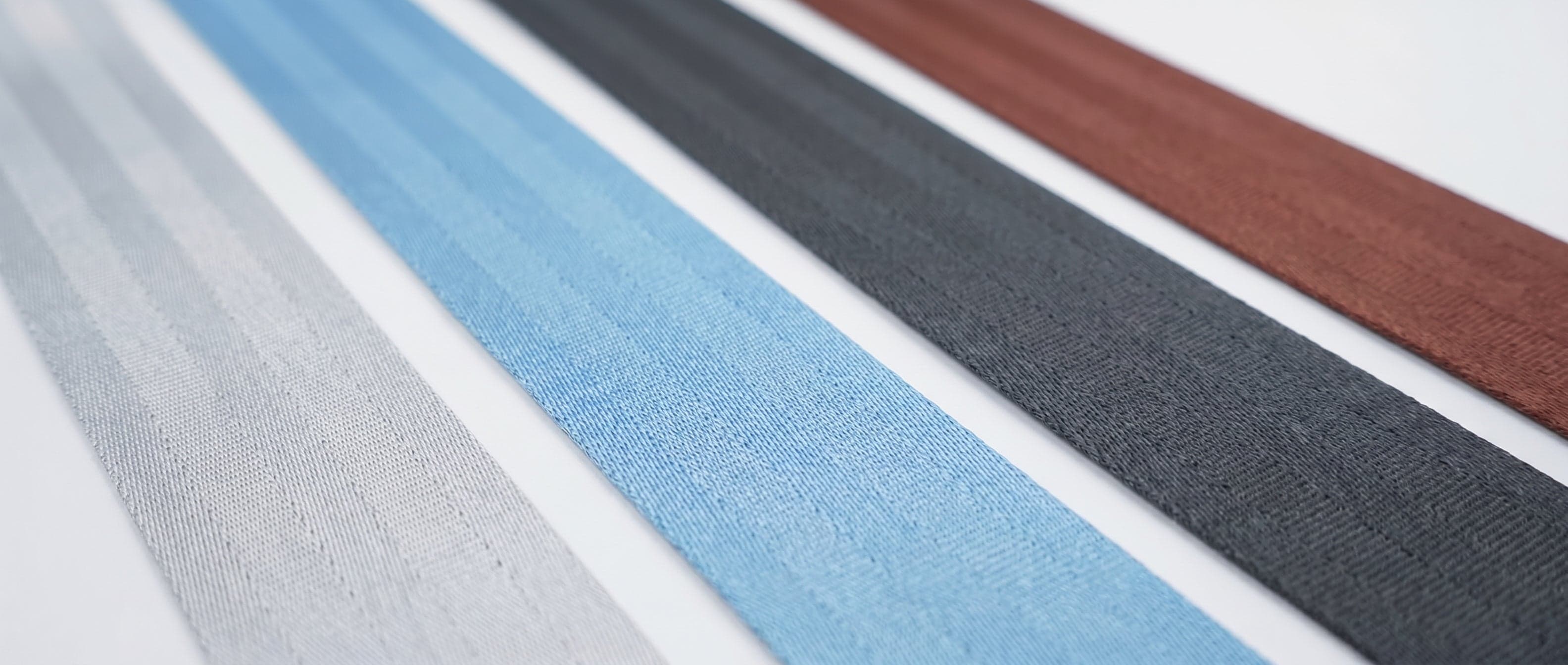
Solution-dyed polyester across constructions and finished webbing.
On Solution Dyeing
Conventional polyester dyeing applies color to finished yarn or webbing through high-temperature aqueous dye baths. Acceptable for fashion. Not the right choice for juvenile safety webbing.
Our polyester webbing is colored through solution dyeing — pigment introduced into the polymer melt before fiber extrusion, becoming molecularly integrated into the fiber itself.
The implications are significant:
Color permanence is intrinsic
Pigment cannot wash, fade, or migrate.
Dye-lot variation is eliminated
Color matching across production runs is deterministic.
No aqueous dye effluent
The coloring process generates no wet-process waste.
Color fastness approaches the theoretical maximum
Grade 4–5 wash, Grade 6+ light on standard ISO scales.
We do not operate piece-dyeing equipment. This is a process choice, made twenty-five years ago and reaffirmed every year since.
Yarn Selection: FDY vs DTY
Within polyester yarn, two primary constructions dominate webbing applications. Two yarn constructions, two application profiles.
Fully Drawn Yarn (FDY)
High-orientation continuous filament with low residual elongation. FDY produces webbing with superior tensile strength, dimensional stability, and consistent surface character. It is our default selection for primary load-bearing applications: stroller harnesses, infant car seat webbing, baby carrier shoulder straps.
Drawn Textured Yarn (DTY)
Continuous filament that has been thermally textured to introduce bulk and softness. DTY produces webbing with greater hand feel, improved tactile properties, and a fuller cross-section. We use DTY where webbing contacts a child's skin directly for prolonged periods: carrier waist belts, contact-side surfaces of harness webbing, comfort-critical accessory straps.
Yarn construction is an application decision, not a cost decision. We use both, selected against the specific performance requirement of each customer's product.
Why It Matters
The fiber decides what the webbing can become.
Tenacity, melting point, moisture regain, color permanence — these are not catalog numbers. They are the constraints that determine whether a finished harness webbing will hold load, hold color, and hold up across years of daily use. We work to those constraints first; the loom is downstream.
Where Polyester Webbing Fits
Our polyester webbing is engineered for the following application categories. Each represents a distinct set of performance requirements, addressed through specific yarn, weave, and finishing choices.
Juvenile Webbing
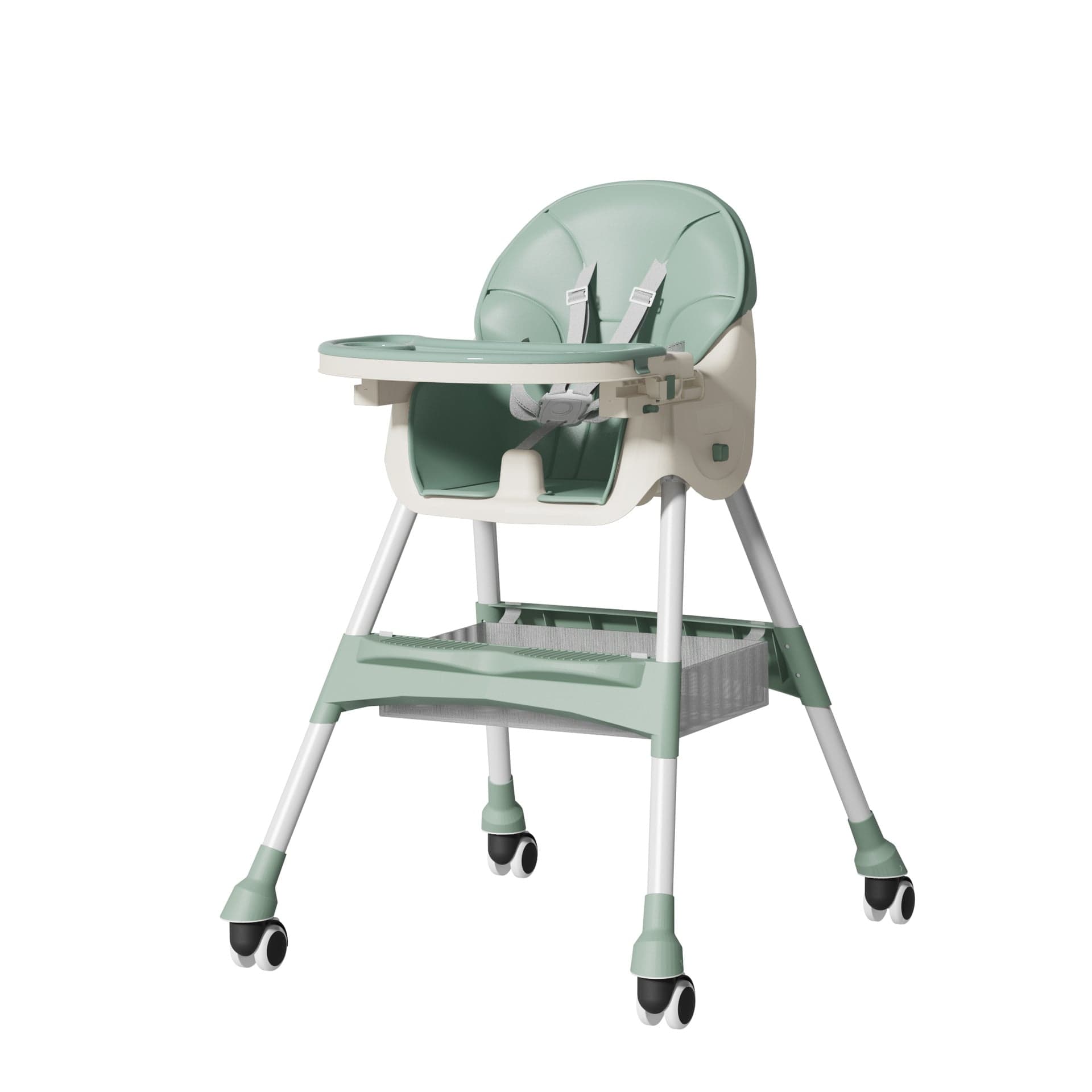
Solution-dyed polyester webbing engineered for stroller harnesses, infant car seat restraints, baby carriers, high chair safety belts, and other juvenile safety applications. Compliant with international juvenile safety and chemical standards.
Additional application categories — outdoor and technical webbing, specialty industrial — will be added as our product line expands.
Looking for Specifications That Aren't Listed?
Custom width, thickness, tensile rating, color, finish — part of our daily work. Direct technical communication with our owner-operator is part of how we work.