
Products · Nylon Webbing
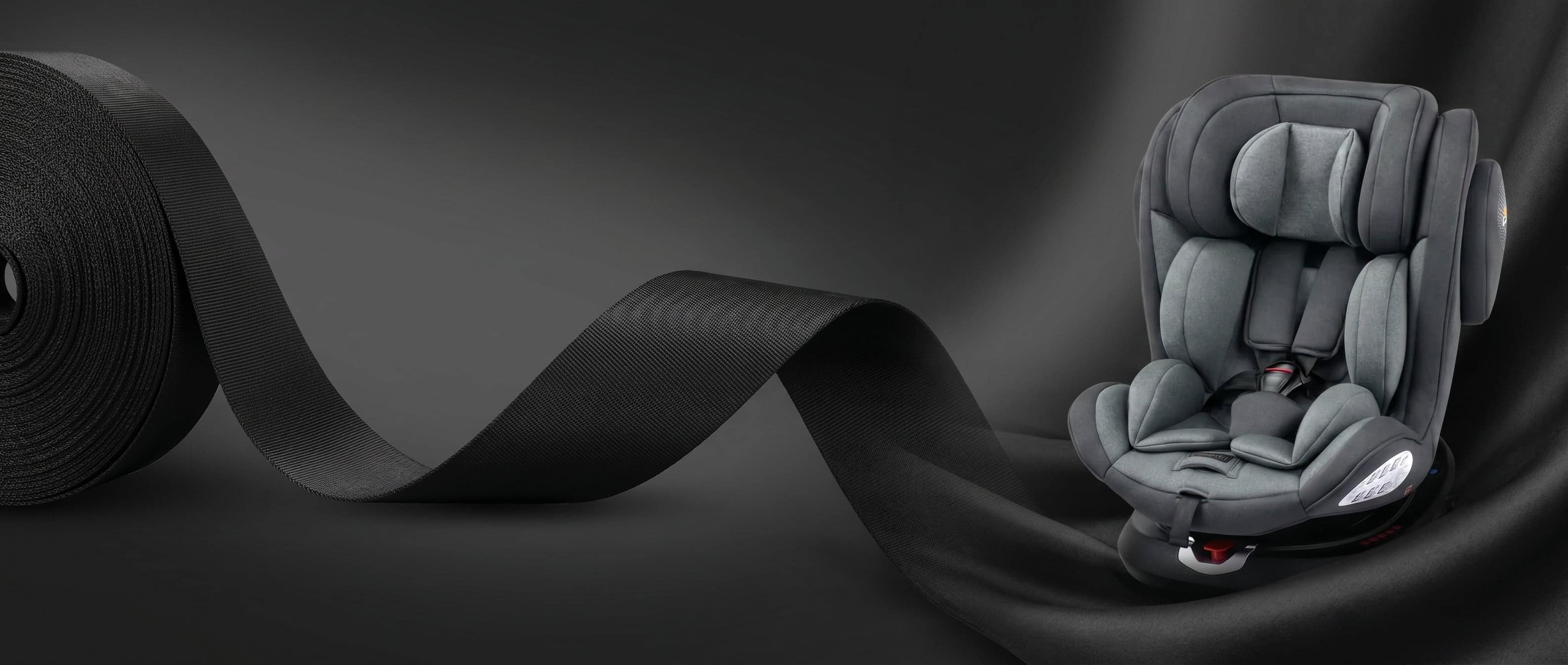
Polyamide Juvenile Webbing
When Shock Absorption and Dynamic Load Performance Define the Application
The Application Context
Polyamide is not the dominant fiber in juvenile webbing globally. Polyester and polypropylene are.
But specific juvenile applications favor polyamide over polyester for sound engineering reasons — applications where webbing must absorb dynamic loads, distribute shock forces, or perform under conditions that would deform polyester or polypropylene.
A specialty juvenile harness designed for active outdoor use. A high-end baby carrier where load distribution under varying parent posture matters. A specialty stroller wagon harness rated for the dynamic loads of off-road terrain. These are not standard juvenile applications, and they are not polyester problems.
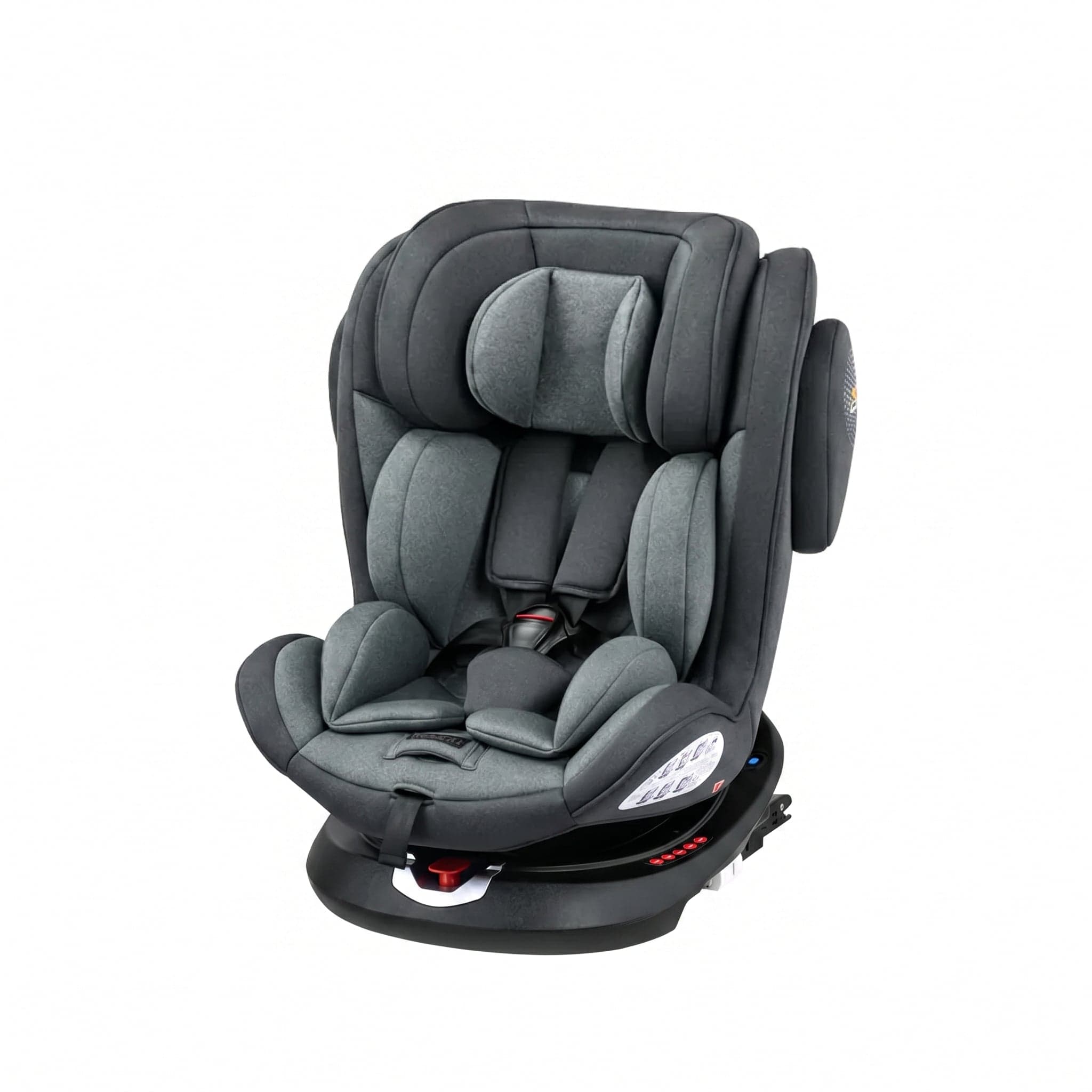
When polyamide is the right material for a juvenile component, the engineering reasoning is specific:
Shock absorption requirements
Polyamide's elongation under load distributes sudden tension events across the webbing structure rather than transmitting them rigidly. For dynamic juvenile applications, this is a meaningful safety characteristic.
High abrasion exposure
Polyamide's abrasion resistance exceeds polyester in applications where webbing contacts edges, hardware, or environmental surfaces during normal use.
Soft hand feel for skin contact
Textured polyamide variants offer soft surface character suitable for skin-contact layers in premium juvenile carriers and harness padding.
Compliance traceability
As with all juvenile webbing, regulatory documentation must trace from yarn batch through finished product. We retain material lot identification and corresponding test reports across the full production cycle.
Coloring Polyamide for Juvenile Applications
Polyamide juvenile webbing is most often produced in solution-dyed natural color or in piece-dyed colors specified by the customer. The five solution-dyed standard colors — black, military green, coyote brown, navy blue, and natural — are not all suitable for juvenile aesthetic requirements. Most juvenile customers requiring colored polyamide webbing choose piece-dyeing through external partner facilities.
When piece-dyed polyamide is specified, we coordinate with the customer's preferred dye house or with our established dyeing partners. Quality oversight, Oeko-Tex Class I compliance verification, and material traceability remain managed through our facility — the dyeing operation itself is performed externally.
For natural-color polyamide juvenile webbing, solution-dyed natural is produced in-house with standard color permanence advantages.
Weaving Capabilities
Standard polyamide juvenile webbing is most often plain or twill woven. Our capabilities extend further.
Jacquard weaving
Integrates patterns and brand markings directly into the woven structure — at the same load capacity as plain webbing of equivalent yarn count.
Custom widths and edge profiles
Specified to customer requirement, not selected from stock catalogs.
Multi-color weaving is constrained by the limited solution-dyed color palette. For multi-color polyamide juvenile webbing, post-weave piece-dyeing through partner facilities is generally required.
Post-Processing Capabilities
We provide three post-processing services in-house:
Ultrasonic cutting
Produces precision-length pieces with sealed, fray-resistant edges. Polyamide welds reliably under ultrasonic energy at calibrated settings.
Laser cutting
Supports complex shapes and tight tolerances. Polyamide's higher melting point allows broader laser parameter ranges than polypropylene.
Pattern engraving
Applies decorative or functional patterns to webbing surfaces, suitable for brand markings, sizing indicators, and decorative elements.
These services are integrated into our standard production workflow.
Specifications
Reference Specifications for Juvenile Polyamide Webbing
| Property | Typical Range for Juvenile Applications | Test Standard |
|---|---|---|
| Yarn Construction | PA6 or PA66 FDY (selected against application) | — |
| Yarn Count | 300D – 1000D | — |
| Webbing Width | 10mm – 50mm | — |
| Webbing Thickness | 0.8mm – 2.5mm | — |
| Tensile Strength (25mm width) | 1,000 – 3,000 N | ASTM D6775 |
| Elongation at Break | 18 – 30% | ASTM D6775 |
| Color Fastness — Washing (piece-dyed) | Grade 4–5 | ISO 105-C06 |
| Color Fastness — Saliva & Perspiration | Grade 4 (minimum) | DIN 53160 |
| Color Fastness — Light | Grade 5–6 | ISO 105-B02 |
| Free Formaldehyde | < 16 mg/kg (Class I limit) | ISO 14184-1 |
| Heavy Metals (extractable) | Below Oeko-Tex Class I limits | Oeko-Tex Standard 100 |
| pH Value | 4.0 – 7.5 | ISO 3071 |
| Compliance | Oeko-Tex Standard 100 Class I · REACH SVHC · CPSIA | — |
All specifications are confirmed against customer product requirements before production. Third-party test reports available on request.
Compliance Standards
Juvenile product brands operating in international markets require webbing components to meet a specific set of safety and chemical standards:
Oeko-Tex Standard 100, Product Class I
Articles for Babies and Toddlers — the most restrictive Oeko-Tex class, covering products intended for children up to 36 months.
EU REACH Regulation
Restriction of Substances of Very High Concern (SVHC).
U.S. CPSIA
Consumer Product Safety Improvement Act — total lead content and phthalates restrictions.
EN 71-3
Migration of certain elements (heavy metals) from toys.
California Proposition 65
Chemical disclosure requirements for U.S. market.
Our polyamide webbing is engineered to meet these standards across the full juvenile production range. Test reports are issued by accredited third-party laboratories (SGS, Bureau Veritas, Intertek) and provided to customers on request. For piece-dyed polyamide juvenile webbing, compliance verification covers both the yarn input and the finished dyed webbing — confirming that the external dyeing process introduces no non-compliant chemistry.
Typical Applications
- Premium baby carrier shoulder and waist webbing where shock absorption matters
- Specialty juvenile harnesses for active outdoor use
- High-end stroller wagon harness systems
- Specialty juvenile climbing and adventure-gear applications
- Premium pet carrier webbing where dynamic load performance is required
- Juvenile equipment for outdoor expedition use (specialty market)
Inquiry
Polyamide juvenile webbing is specialty work. When polyamide is the right material — and when polyester is — is part of the technical conversation we have at the start of every project. Coloring decisions, including whether piece-dyeing is required and through which partner facility, are determined alongside the technical specifications.
Contact Mason directly for technical discussion or sample request.